
Personal Income Tax Filing Malaysia- 2025 Guide
Navigating personal income tax in Malaysia can feel overwhelming, especially with changing regulations, evolving reliefs, and the responsibility of accurate reporting. Whether you’re filing for the first time or looking to optimise your annual personal tax return, understanding how the system works is essential, not just for compliance, but for smarter financial planning. Taxpayers must register on the MyTax portal to obtain a Tax Identification Number (TIN), also known as an identification number TIN, which is required for tax filings.
Tax filing in Malaysia is done via a self-assessment system, where taxpayers calculate and file their taxes annually. This comprehensive 2025 guide is focused on the Year of Assessment (YA 2025), and all deadlines and requirements refer to this period. From understanding tax obligations to mastering e filing, calculating income tax payments, and ensuring your income tax return form is completed correctly, this guide reflects practical insights grounded in real-world tax scenarios. Individuals who hold a Tax Identification Number (TIN) and receive a notice to submit a tax return must do so within the stipulated deadline, even if they have no income.
It is important to pay income tax as required, failure to file an Income Tax Return Form may result in a fine ranging from RM200 to RM20,000 or imprisonment for a term not exceeding 6 months, or both.

Understanding Personal Income Tax Malaysia
At its core, personal income tax Malaysia is a system where individuals are taxed on income earned within the country. The Inland Revenue Board of Malaysia (LHDN) administers and enforces tax regulations, ensuring that all eligible individuals complete their individual tax filing annually.
Taxable income includes income from employment, business profits, rental income, freelance work, dividends, and other gains. This means your tax return must declare all sources that contribute to your total chargeable income. Malaysia’s personal income tax system follows a territorial principle, so only income earned in or income derived from Malaysia is typically taxable. Residents are generally taxed only on income earned in Malaysia, while foreign income is generally exempt if tax has already been paid on it abroad.
Malaysia operates on a self-assessment system, meaning taxpayers are responsible for accurately reporting their income and calculating their tax liability when submitting their income tax return.
This self-assessment approach places importance on awareness and accuracy. Errors in your LHDN tax filing whether intentional or accidental can lead to penalties, audits, or delays in refunds.
Why Filing Income Tax Matters More Than You Think
Many individuals assume that file income tax obligations only matter if they owe money. In reality, submitting your income tax return plays a much broader role in your financial life. In Malaysia, it is a legal obligation to pay income tax if your income exceeds the threshold, and timely filing is crucial to avoid penalties under the Income Tax Act 1967.
A properly filed personal tax return serves as official proof of income, which is often required when applying for home loans, car financing, or even visas. Financial institutions in Malaysia rely heavily on your tax records to assess creditworthiness.
Additionally, consistent individual tax filing helps establish a clean financial history. Even if your income falls below taxable thresholds, submitting a return demonstrates compliance and can prevent complications in future financial dealings.
Who Needs to File Income Tax in Malaysia?
In Malaysia, individuals must file income tax if their annual income exceeds the taxable threshold. However, the requirement isn’t limited to high earners.
Employees, freelancers, gig workers, and business owners are all subject to income tax in Malaysia if they generate income. Even individuals with multiple income streams such as rental properties or side businesses must ensure that all earnings are declared in their income tax return form.
Importantly, filing isn’t just about obligation, it’s also about opportunity. By submitting your personal tax return, you gain access to various tax reliefs and rebates that can significantly reduce your final tax payable.
Income Tax Rates in Malaysia for 2025
Malaysia adopts a progressive tax system, which means that the more you earn, the higher your income tax rates. However, these rates are applied incrementally across income brackets rather than as a flat rate.
For the assessment year 2025, the income tax rates for tax residents in Malaysia are as follows:
- 0% for the first RM5,000
- 1% for the next RM15,000
- 3% for the next RM15,000
- 6% for the next RM15,000
- 11% for the next RM20,000
- 19% for the next RM30,000
- 25% for the next RM300,000
- 26% for the next RM200,000
- 28% for the next RM1,400,000
- and 30% for income exceeding RM2,000,000. These tax rates and your residency status are determined based on your situation during a particular calendar year.
Individuals with chargeable income not exceeding RM35,000 may qualify for a RM400 tax rebate, which directly reduces the final tax amount payable.
Non-residents are taxed at a flat tax rate of 30% on their employment income and are not eligible for personal tax reliefs. The distinction between tax residents and non-residents is important, as tax residents benefit from progressive rates and reliefs, while non-residents face a single flat rate.
Understanding how income tax rates work is critical when estimating your income tax payments. Your total tax liability is calculated based on chargeable income after deducting allowable expenses and reliefs.
For many taxpayers, confusion arises not from the rates themselves, but from how reliefs impact taxable income. This is where strategic planning can make a meaningful difference in reducing your final tax.
The Role of E Filing in Malaysia
The introduction of e filing has significantly streamlined the process of submitting your income tax return. Taxpayers in Malaysia are required to file their income tax returns electronically through the MyTax portal, which provides a user-friendly interface for completing and submitting tax forms. Through LHDN’s online system, taxpayers can complete their individual tax filing quickly, securely, and with minimal paperwork.
Using e filing, you can:
- Access your pre-filled tax details
- Submit your income tax return form digitally
- Track your submission status
- Receive faster refunds directly into your bank account
The filing process involves collecting all necessary documents, completing your tax form online via the MyTax portal, submitting your return, and making any required payments through the available digital payment options.
For most individuals, e filing is not just convenient, it’s the preferred method due to its efficiency and reduced risk of errors. Always verify all details before final submission to ensure a successful submission, and obtain a confirmation receipt as proof of fulfilling your tax obligations.
Tax Forms and Filing: Choosing and Completing the Right Forms
When it comes to filing income tax in Malaysia, selecting the correct tax form is the first step toward a smooth and compliant tax filing experience. The Inland Revenue Board of Malaysia (LHDN) offers a range of tax forms tailored to different types of income, ensuring that each taxpayer can accurately report their earnings and claim relevant reliefs.
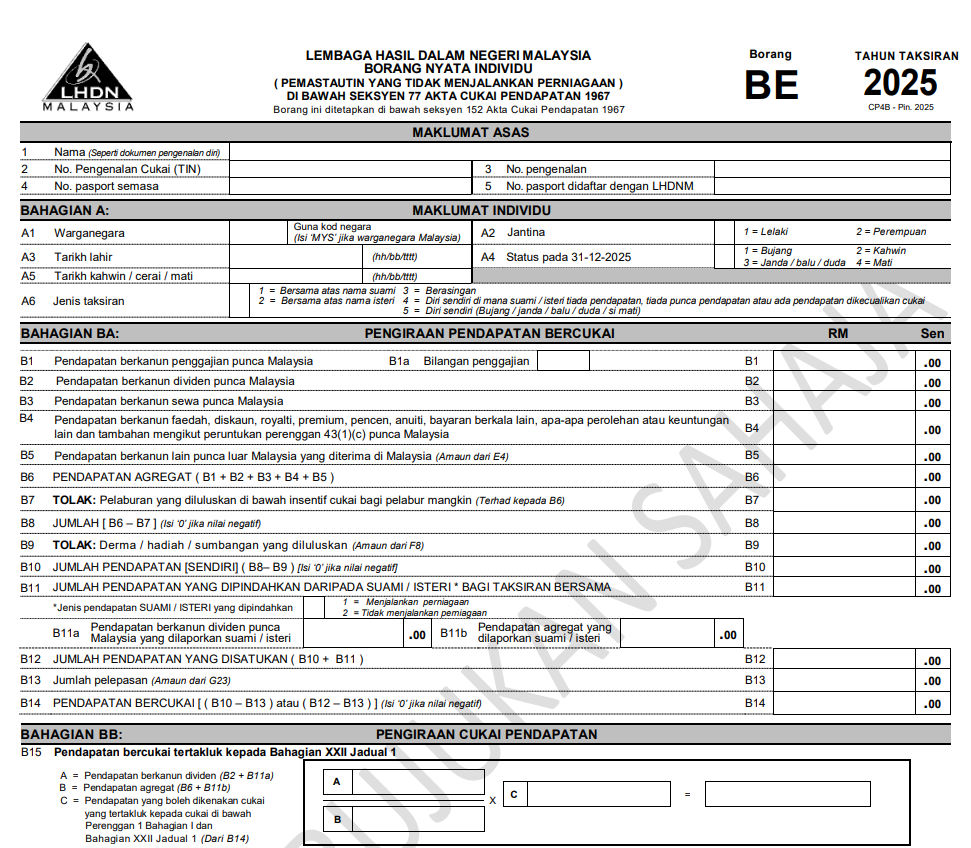
For most individuals with employment income, the BE form is the standard choice. This form is designed for Malaysian residents who earn income solely from employment and do not have business income. If you are self-employed or run a business, the B form is required, as it accommodates business income and allows for the declaration of additional deductions and reliefs specific to entrepreneurs and freelancers.
Those who receive rental income or have other sources of income, such as dividends or royalties, may need to use supplementary forms or sections within the main tax return to ensure all income is properly declared. The Revenue Board of Malaysia provides clear guidelines on its website and through the MyTax portal to help taxpayers identify the appropriate forms for their unique situations.
Choosing the right form is not just about compliance, it’s about avoiding penalties and ensuring your tax matters are handled efficiently. Filing the wrong form or omitting sources of income can lead to delays, audits, or additional tax undercharged. Always review your income sources for the immediate preceding calendar year and consult the LHDN’s resources if you are unsure which form applies.
Completing your chosen tax form accurately is equally important. Double-check all personal details, income figures, and relief claims before submission. Whether you are reporting employment income, business income, or rental income, thoroughness at this stage helps you avoid penalties and ensures your income tax return is processed without unnecessary complications.
By understanding the different tax forms and their purposes, you can approach your income tax filing in Malaysia with confidence, knowing you are meeting all requirements set by the Inland Revenue Board and safeguarding your financial interests.
Preparing for Your Personal Tax Return
Before you begin your LHDN tax filing, preparation is key. A well-organised approach ensures accuracy and minimises the risk of missing deductions.
Your income tax return form requires supporting documents such as your EA Form (for employees), which details your income, deductions, and taxes withheld essential for accurate tax filing. Income statements and proof of Employees Provident Fund (EPF) contributions are also required. EPF contributions are eligible for tax relief and can be optimized for tax savings, providing additional advantages for EPF members.
Keeping records of expenses is equally important. Receipts for lifestyle purchases, medical expenses, medical insurance, and education costs as well as expenses related to dependent relatives should be kept to claim tax relief, provided they meet LHDN requirements. If you receive benefits in kind, note that certain benefits may be exempt from tax if they fall within prescribed limits under Malaysian tax laws. For first-time homebuyers, retaining the purchase agreement is crucial when claiming related tax relief.
Finally, ensure you select the appropriate Income Tax Return Form Form BE for resident individuals without business income or Form B for those carrying on a business based on your income source.
Claim Tax Relief and Reduce Your Final Tax
One of the most valuable aspects of income tax in Malaysia is the availability of tax reliefs. These reliefs are designed to reduce your chargeable income, ultimately lowering your final tax payable.
When you claim tax relief, you are effectively deducting eligible expenses from your income. Common relief categories include lifestyle expenses, insurance premiums, medical costs, and education fees.
EPF contributions are among the most significant relief components for salaried employees. Combined with life insurance, they form a major portion of allowable deductions in most personal tax return submissions.
Strategic use of reliefs can result in substantial savings. However, accuracy is critical overclaiming or unsupported claims can trigger audits or penalties during your LHDN tax filing.
Understanding Income Tax Payments
Once your income tax return is submitted, LHDN will assess your filing and determine whether you owe additional tax or are eligible for a refund.
If you have outstanding tax, you must proceed with income tax payments using the assigned bill number. This unique reference ensures your payment is correctly recorded in the system.
Timely income tax payments are crucial. Late payments can result in penalties, which increase the overall tax burden. On the other hand, overpayments are refunded directly to your registered bank account, making accurate banking details essential.
The Importance of Accurate Bank Account Details
Your bank account plays a critical role in the personal income tax Malaysia process, particularly when it comes to refunds.
If your income tax return form indicates that you are eligible for a refund, LHDN will transfer the amount directly to your registered account. Errors in account details can delay this process significantly.
Ensuring your bank account information is up-to-date is a small but important step that many taxpayers overlook during individual tax filing.
Common Challenges in LHDN Tax Filing
Despite the availability of e filing, many individuals still encounter challenges when completing their income tax return. Residence status and residency status are crucial in determining your tax rates and eligibility for reliefs, as tax residency is established if you are in Malaysia for 182 days or more in a calendar year.
One common issue is underreporting income, particularly for freelancers or individuals with multiple income streams. Another frequent mistake is failing to claim tax relief properly, resulting in higher-than-necessary income tax payments.
Errors in entering figures, missing deadlines, or misunderstanding eligibility criteria can all impact the outcome of your personal tax return. Medical treatment is considered a valid reason for requesting an extension of time to file an appeal or appeal-related documents.
These challenges highlight the importance of understanding the system or seeking professional guidance when needed.
Deadlines for Income Tax Filing Malaysia 2025
Meeting deadlines is a critical part of individual tax filing. In Malaysia, the statutory filing deadlines for income tax returns are 30 April for individuals without business income and 30 June for those with business income, with possible extensions granted by LHDN. It is essential to submit your tax return by the stipulated deadline to avoid penalties.
For the 2025 assessment year, manual submissions are typically due by the end of April, while e filing deadlines extend into mid-May.
Failing to file income tax on time can result in penalties ranging from fines to additional tax charges. Staying aware of deadlines ensures your LHDN tax filing remains compliant and stress-free.
The Bigger Picture: Tax Filing as Financial Strategy
While many view income tax in Malaysia as an annual obligation, it can also be approached as a strategic financial tool.
Proper individual tax filing allows you to:
- Optimise your tax position through reliefs
- Maintain accurate financial records
- Strengthen your financial credibility
When planning your taxes, remember that real property gains tax is a separate tax assessed on the disposal of property and should be considered in your overall tax planning. Additionally, certain income, such as tax-exempt dividends, is not subject to Malaysian income tax and can impact your overall tax calculation.
Your personal tax return is more than a compliance document, it’s a reflection of your financial discipline.
Professional Support for Personal Income Tax Malaysia
As tax regulations evolve, many individuals choose to seek expert assistance for their LHDN tax filing.
Professional support ensures that your income tax return form is accurate, compliant, and optimised for available reliefs. This is particularly valuable for individuals with complex income structures, such as business owners or freelancers.
At AMIS Asia, we bring practical experience and up-to-date knowledge to help individuals navigate personal income tax Malaysia with confidence. From handling e filing submissions to advising on income tax payments, our approach focuses on accuracy, compliance, and efficiency. If you are uncertain about your tax filings or have unique circumstances, we recommend seeking professional tax advice. This guide is for educational purposes only and should not be considered a substitute for personalised tax advice from qualified professionals.
Final Thoughts
Handling your personal income tax Malaysia obligations doesn’t need to be complicated or stressful. With the right understanding of income tax in Malaysia, proper documentation, and timely e filing, you can complete your individual tax filing accurately while maximising available reliefs and minimising your final tax.
A well-prepared personal tax return not only ensures compliance with LHDN requirements but also strengthens your overall financial position whether you’re planning for loans, investments, or future growth.
If you’re unsure about your income tax return form, struggling with income tax payments, or want to optimise how you claim tax relief, getting professional support can make a significant difference. If you have any questions related to personal income tax Malaysia, individual tax filing, or even corporate tax, we’re here to help. Our team at AMIS Asia is ready to guide you through your LHDN tax filing, clarify your income tax return form, and support you with accurate, compliant submissions.
Contact us today and let us simplify your personal tax return and business tax matters with confidence and ease.
FAQs
1. Who needs to file income tax in Malaysia?
Anyone earning above the taxable threshold or with multiple income sources must file income tax through an income tax return form.
2. How do I submit my income tax return?
You can submit your income tax return LHDN’s e filing system online.
3. What documents are needed for individual tax filing?
You’ll need your EA Form, income records, receipts to claim tax relief, and details of EPF contributions.
4. What happens if I miss the tax filing deadline?
Late LHDN tax filing may result in penalties or additional charges on your income tax payments.
5. How can I reduce my income tax legally?
You can reduce your final tax by maximising eligible deductions and properly claim tax relief.