
10 Common Accounting Mistakes SMEs Make (And How to Avoid Them)
Running a small or medium-sized business (SME) requires constant attention to operations, customers, and growth but accounting is often where many businesses start to struggle. From bookkeeping errors and inconsistent financial records to poor financial reporting, these small issues can quickly develop into serious accounting problems that impact cash flow, profitability, and tax compliance. In fact, cash flow issues account for a significant percentage of business failures, with one study finding that 82% of companies fail due to cash flow problems.
In many cases, these accounting mistakes SMEs make are not due to a lack of effort, but rather a lack of proper systems and visibility over business finances. Manual processes, disconnected spreadsheets, and limited financial analysis often lead to inaccurate financial records and prevent the business owner from making confident decisions. Accounting errors can have serious consequences for SMEs, including cash flow crises, legal penalties, and hindered business growth.
This guide explores the 10 most common accounting mistakes SMEs make, why they happen, and practical ways to avoid them through better tools, processes, and financial discipline.
Introduction to Accounting for SMEs
For small and medium-sized enterprises (SMEs), effective management of business finances is the foundation for sustainable growth and long-term success. Accounting is more than just tracking money in and out, it provides a clear, accurate picture of your company’s financial health through detailed financial statements and regular financial reporting. These insights are essential for making informed business decisions, planning for the future, and ensuring compliance with ever-changing tax laws.
However, many small business owners find themselves facing a range of accounting challenges. From managing unpredictable cash flow and covering day-to-day expenses to navigating complex tax regulations, the demands on a medium sized enterprise can be overwhelming. Common accounting mistakes such as inconsistent record-keeping, poor expense tracking, and failing to separate personal and business finances can quickly lead to bigger problems like inaccurate financial records, missed tax deductions, and even non compliance with tax authorities.
Fortunately, modern accounting software has made it easier than ever for SMEs to streamline their financial management. By automating routine tasks, improving the accuracy of financial data, and simplifying the preparation of financial statements, these tools help business owners stay on top of their accounting responsibilities. With the right systems in place, SMEs can avoid costly errors, maintain healthy cash flow, and focus on what matters most: growing their business.
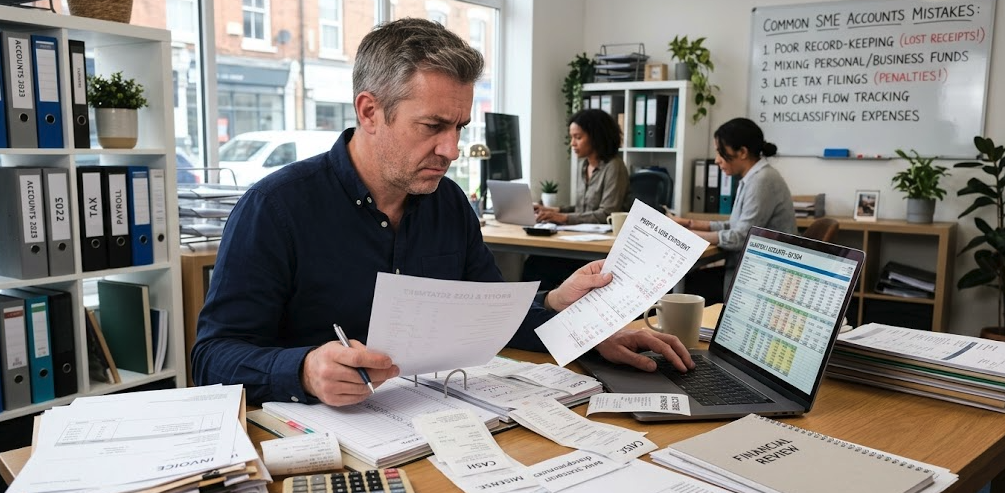
10 Common Accounting Mistakes SMEs Make
Many SMEs struggle with ongoing accounting challenges that slowly affect their profitability, compliance, and ability to scale. These issues are often not immediately obvious, but over time they lead to some of the most common mistakes, resulting in serious financial errors, unreliable financial records, and weak financial reporting.
A common mistake is relying on inconsistent processes, manual data entry, or lack of proper accounting software. Examples of common accounting mistakes for SMEs include mixing personal and business finances, neglecting regular reconciliation, poor expense tracking, and ignoring tax obligations.
Mishandling accounts payable and accounts receivable processes is also a frequent source of accounting mistakes. Below are the 10 most common accounting mistakes SMEs make, explained in more detail so you can identify and fix them early.
1. Poor bookkeeping and bookkeeping errors
One of the most common bookkeeping errors is failing to record transactions consistently or accurately. SMEs often delay data entry or rely on memory, which leads to missing invoices, duplicate entries, and incomplete financial records. Making accurate journal entries is crucial to ensure all transactions are properly recorded and financial statements comply with accounting standards.
Regular reconciliations should occur at least monthly to catch discrepancies early.
Over time, this results in inaccurate reporting and unreliable financial analysis, making it difficult to understand true business performance. Unorganized record keeping and lack of proper journal entries can make it difficult to verify expenses during audits. According to a study, nearly 44% of SMEs struggle with keeping their financial records organized, which can ultimately lead to the downfall of the business.
2. Mixing personal and business finances
Mixing personal and business expenses is a critical accounting problem that distorts business finances, especially when business transactions are not clearly separated from personal expenses. When each transaction is not properly tracked and categorized, it becomes difficult to monitor profitability or prepare accurate tax filings. Using a single bank account for both personal and business expenses can make it nearly impossible to track tax deductions and maintain separate accounts for payroll taxes. Maintaining separate accounts and a dedicated business bank account is essential for simplifying bookkeeping, ensuring tax compliance, and providing legal protection. Failing to keep personal and business finances separate can also create personal liability, as creditors may pursue personal assets to settle business debts.
This is one of the most common accounting mistakes SMEs make, and it often leads to confusion during audits and tax reporting.
3. Poor cash flow management
Cash flow is one of the most important aspects of any SME, yet many businesses fail to monitor it properly. Many small business owners struggle to earmark funds for recurring costs, which can lead to poor cash flow management and threaten the business’s survival. Even profitable companies can face financial pressure if cash inflows and outflows are not tracked accurately.
To stay on top of cash flow, businesses should analyze their bills carefully and maintain a strong accounts receivable process to ensure timely collection of customer payments. Without proper visibility, SMEs risk late supplier payments, missed opportunities, and liquidity issues that affect daily operations. Inaccurate bookkeeping can also lead to unexpected liquidity gaps and an inability to meet payroll or vendor obligations.
4. Not using accounting software effectively
Relying on spreadsheets instead of modern accounting software increases the risk of accounting errors and manual mistakes. Spreadsheets are difficult to scale and often lack real-time updates.
Cloud-based systems like Xero improve accuracy, automate bookkeeping, and provide real-time financial data for better decision-making. Many of these tools are equipped with OCR technology, which can automatically capture receipts and maintain accurate, real-time records, further reducing manual entry errors.
5. Inaccurate financial records
Inaccurate or incomplete financial records are a major issue for growing SMEs. This usually happens when transactions are not recorded properly or when reconciliation is not done regularly.
Poor record accuracy leads to misleading reports, which directly affects financial analysis and strategic planning.
6. Weak financial reporting practices
Many SMEs do not generate regular or structured financial reporting, making it difficult to understand business performance. Timely financial reporting is crucial for compliance; creating a compliance calendar and setting reminders for reporting deadlines within the fiscal year can help businesses avoid late submissions and regulatory issues. Without proper reports such as profit and loss statements or balance sheets, decision-making becomes guesswork.
This lack of visibility often results in poor financial decisions and missed growth opportunities.
7. Poor expense tracking
Untracked or misclassified expenses can significantly distort profit calculations. For example, if an equipment purchase is incorrectly classified as an operating expense instead of a capital expenditure, it can affect your eligibility for tax deductions and lead to inaccurate financial statements. Misclassification of expenses, such as recording capital expenditures as operating expenses, can result in significant financial inaccuracies and potential tax penalties.
Improper expense categorization can also hinder your ability to identify spending patterns, follow budgets accurately, and forecast future expenses, potentially leading to unintended fraud. Regular training for accountants or bookkeepers on expense classification guidelines is essential to prevent costly errors in financial reporting.
Proper expense tracking ensures better budgeting and helps maintain control over business finances.
8. Lack of financial analysis
Without proper financial analysis, SMEs cannot identify trends, inefficiencies, or growth opportunities. While many business owners focus only on revenue without analysing cost structures or margins, financial professionals can provide deeper insights and help avoid missed opportunities. For example, failing to analyse which products have the highest margins can significantly impact decisions on inventory and marketing strategies.
This limits long-term planning and can significantly impact the ability to improve profitability and drive sustainable growth.
9. Tax compliance mistakes and non compliance risks
Errors in tax filing, missed deadlines, or incorrect calculations can lead to serious non-compliance issues, especially when it comes to managing sales tax and payroll taxes accurately. These mistakes often arise from poor record keeping or outdated accounting systems, which can complicate tax preparation and increase the risk of errors.
Organized and up-to-date financial records are essential for smooth tax preparation, helping SMEs avoid issues during tax season and potential audits. Regulatory penalties and late filings can trigger heavy fines, interest charges, and increased scrutiny from tax authorities. Non-compliance with tax laws can result in hefty fines and legal issues, making it crucial for SMEs to stay updated with tax regulations and seek professional help, such as hiring a CPA, to navigate complex and constantly changing tax laws.
Many SMEs face penalties each year for tax non-compliance, highlighting the importance of understanding and adhering to tax laws to avoid financial repercussions. Failing to pay estimated quarterly taxes can also lead to fines and penalties, so businesses must proactively manage their tax obligations throughout the year. Ensuring accurate financial records throughout the year helps reduce tax risks and penalties.
10. No structured accounting processes or internal controls
Without proper accounting processes, SMEs often experience repeated errors and inconsistencies. Lack of approval workflows, documentation standards, and reconciliation processes leads to ongoing accounting problems. Implementing practical steps such as using dedicated business bank accounts, automating with cloud software, reconciling accounts monthly, and keeping organized, digital records can significantly improve accuracy and compliance.
Ensuring the accounting department receives its fair share of company resources is crucial for effective financial management. Engaging accounting professionals to establish and oversee structured processes further strengthens internal controls and helps prevent costly errors. Structured systems help maintain accuracy and accountability across all financial activities.

How to Avoid Accounting Mistakes
Avoiding these common accounting mistakes SMEs make requires more than just awareness, it starts with understanding your business structure, as this influences tax obligations, legal liabilities, and record-keeping practices essential for proper accounting and compliance. Implementing better systems, automation, and disciplined financial management is crucial. It’s important to track all sources of income, especially those that are small or irregular, to ensure accurate financial reporting and proper tax compliance. SMEs should also accurately record all transactions, including cash payments, to maintain reliable financial data and improve cash flow management. By improving processes and adopting the right tools especially those tailored for SMEs with unique needs, businesses can significantly reduce accounting errors and improve overall financial performance. Investing in financial literacy is also essential for SME owners to better interpret their financial health and make informed decisions.
1. Implement cloud-based accounting software
Using modern accounting software like Xero helps automate bookkeeping, reduce manual errors, and improve financial reporting accuracy. It also provides real-time insights into business finances, helping SMEs make faster and better decisions.
2. Maintain accurate financial records consistently
Consistency is key to avoiding bookkeeping errors. Recording transactions daily or weekly ensures that financial records remain complete, accurate, and up to date for proper analysis.
3. Separate business and personal finances
Always maintain separate bank accounts for business and personal use. This ensures clean financial tracking, improves transparency, and simplifies tax reporting.
4. Strengthen cash flow monitoring
Regular cash flow tracking helps SMEs anticipate shortages and plan expenses effectively. With proper visibility, businesses can avoid unnecessary financial pressure and improve stability.
5. Improve financial reporting and analysis
Using automated reports allows SMEs to understand profitability, expenses, and trends clearly. Better financial analysis leads to smarter decisions and improved long-term growth planning.
6. Build structured accounting processes
Standardising workflows such as approvals, invoicing, and reconciliation helps reduce inconsistencies. Strong processes minimise accounting errors and improve operational efficiency.
7. Ensure tax compliance through proper systems
Keeping financial data organised throughout the year reduces the risk of non compliance. Proper systems ensure tax filings are accurate, timely, and stress-free.
Why Accounting Mistakes SMEs Make Can Be Costly
Even small accounting mistakes SMEs make can quickly turn into serious financial issues if they are not identified and corrected early. What starts as minor bookkeeping errors or missing entries can escalate into inaccurate financial records, distorted financial reporting, and poor business decisions.
One of the biggest risks is the impact on business finances. When financial data is incorrect or incomplete, SMEs may misjudge profitability, overspend due to inaccurate cash flow visibility, or underprice their products and services. Over time, these financial mistakes reduce stability and limit growth opportunities.
Another major issue is tax and regulatory exposure. Poor record-keeping and accounting errors can lead to non compliance, resulting in penalties, late filings, or incorrect tax submissions. This is especially common when businesses rely on manual processes instead of structured accounting software.
On top of that, weak financial analysis makes it difficult for business owners to understand performance trends or make informed decisions. Without accurate financial reporting, SMEs are essentially operating without clear visibility of their actual financial position.
In short, accounting problems are not just administrative issues, they directly affect cash flow, compliance, and long-term sustainability. This is why having proper systems, processes, and tools in place is essential for maintaining accurate financial records and avoiding costly financial mistakes.
Final Thoughts
Most accounting mistakes SMEs make do not happen overnight, they build up gradually through inconsistent bookkeeping, weak processes, and a lack of proper accounting software. Over time, these issues lead to inaccurate financial records, poor financial reporting, and limited visibility over true business finances.
The good news is that these problems are preventable. With the right systems in place, SMEs can significantly reduce bookkeeping errors, improve cash flow management, and strengthen overall financial analysis. Small improvements in how transactions are recorded, reviewed, and reported can make a major difference in long-term business performance and compliance.
However, many SMEs still struggle to implement these improvements effectively on their own. This is where structured cloud accounting systems and professional guidance become essential.
If your business is facing ongoing accounting challenges, now is the right time to take control of your financial processes. Partner with AMIS Asia to streamline your accounting, implement Xero cloud accounting, and eliminate costly financial mistakes so you can focus on growing your business with confidence.
FAQs
- What are the most common accounting mistakes SMEs make?
The most common accounting mistakes SMEs make include bookkeeping errors, mixing personal and business finances, poor cash flow management, inaccurate financial records, and weak financial reporting practices. These issues often lead to accounting problems that affect profitability and compliance.
- Why do SMEs often have bookkeeping errors?
Bookkeeping errors usually happen due to manual data entry, lack of time, or inconsistent recording of transactions. Without proper accounting software, SMEs may miss invoices, duplicate entries, or fail to update financial records regularly.
- How do accounting mistakes affect business finances?
Accounting mistakes can distort business finances, making it difficult to track profit, manage cash flow, or plan expenses. Inaccurate financial data often leads to poor decision-making and can negatively impact business growth.
- How can SMEs avoid accounting errors?
SMEs can reduce accounting errors by using cloud-based accounting software, maintaining consistent bookkeeping practices, separating personal and business finances, and reviewing financial reports regularly.